
1. Visão geral do mercado de filmes de PVB
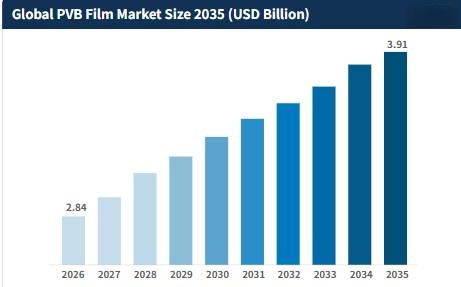
O global Filme de polivinil butiral (PVB) O mercado foi avaliado em US$ 2,84 bilhões em 2026 e projeta-se que alcance US$ 3,91 bilhões até 2035, expandindo a uma Taxa de Crescimento Anual Composta (CAGR) de 3,6%. O filme de PVB é um material termoplástico translúcido produzido pela extrusão de resina de PVB plastificada, amplamente utilizado para laminação de segurança.
2. Principais fatores e tendências de mercado
O setor de energia solar fotovoltaica emerge como um motor de crescimento.
O PVB está ganhando grande impulso na produção de módulos solares de película fina. Colocado entre o circuito e a placa de vidro traseira, o PVB protege os circuitos solares do desgaste ambiental e previne curtos-circuitos. Comparado aos tradicionais revestimentos traseiros de Tedlar, o PVB oferece uma alternativa de menor custo com resistência superior a impactos. Ele também proporciona maior clareza óptica e melhor adesão das células. Etileno-acetato de vinila (EVA), atraindo investimentos substanciais em energia limpa.
Normas de segurança para vidros automotivos
O vidro laminado automotivo representa 52% da demanda global total de PVB. Mais de 90% dos veículos produzidos em todo o mundo utilizam para-brisas laminados de PVB devido às normas de segurança regulamentares, à proteção UV e à integridade estrutural.
Expansão da urbanização e da construção
O crescimento da população mundial e a transformação do campo em cidade estão impulsionando a construção civil em todo o mundo. Películas de PVB padrão estão sendo cada vez mais integradas em janelas arquitetônicas, portas de vidro e elementos estruturais para proporcionar proteção superior e resistência a estilhaços.
3. Restrições e Desafios
Site: www.elephchem.com
WhatsApp: (+)86 13851435272
E-mail: admin@elephchem.com






 Rede IPv6 suportada